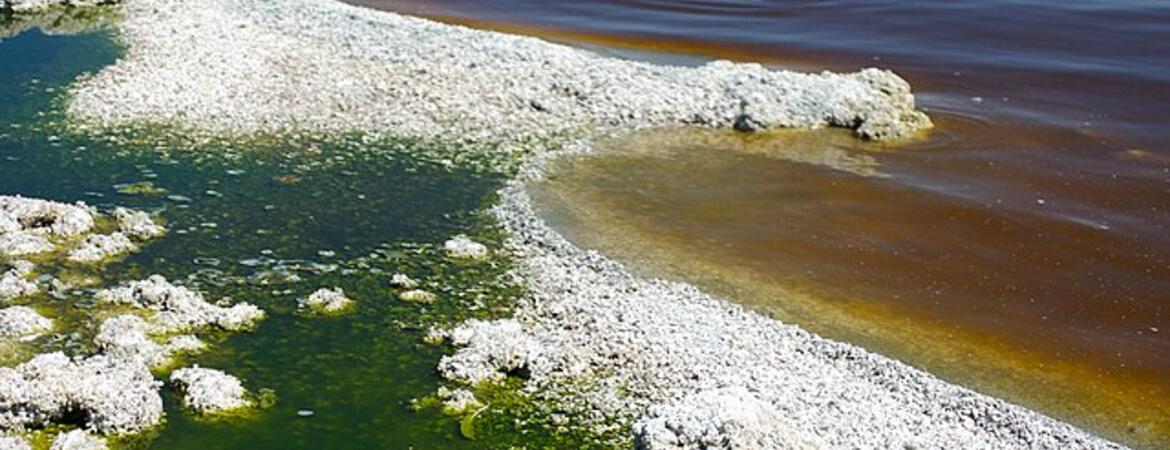
Primary producers, including bacteria, phytoplankton, and algae, play a fundamental role in sustaining the entire food web. The Salton Sea ecosystem faces significant challenges due to excessive nutrient influxes from agricultural runoff and untreated sewage, leading to heightened primary production and the formation of oxygen-depleted dead zones. These conditions lead to harmful algal blooms, dominated by dinoflagellates and cyanobacteria, which produce toxins harmful to wildlife and humans. Additionally, accumulation of agricultural chemicals and naturally occurring elements in predators poses further risks to ecosystem health. Understanding these complex interactions is crucial for devising effective conservation strategies to mitigate environmental degradation of the Salton Sea ecosystem.